
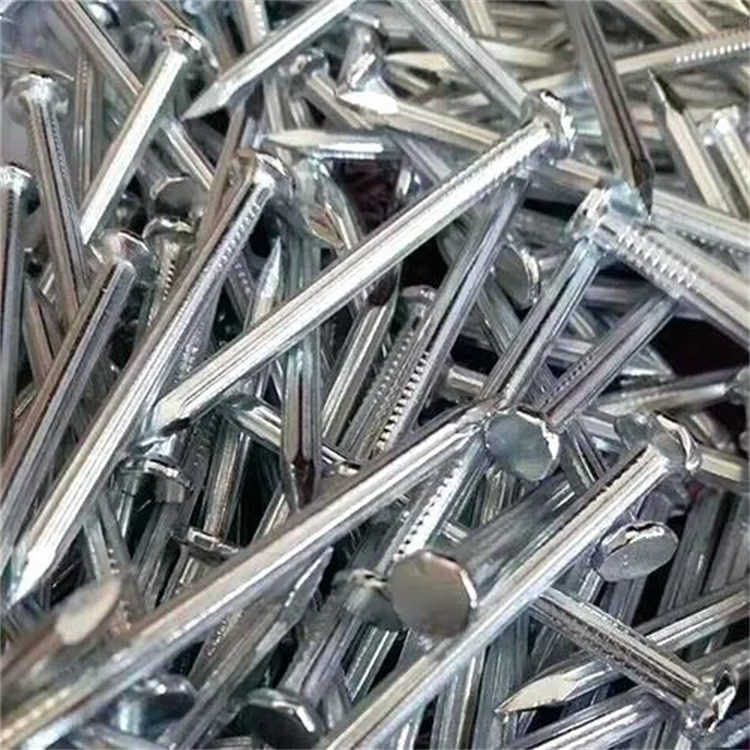
Concrete nails (also called steel nails ) are high-strength nails specifically designed for hard walls. Here are their core characteristics and applicable scenarios:
I. Core Characteristics
1. High Material Hardness: Made of high-carbon steel or alloy steel, and hardened, their hardness far exceeds that of ordinary iron nails. They can withstand strong impacts and penetrate hard substrates such as cement, brick walls, and stone.
2. Rust-Proof Surface Treatment: The surface is often galvanized or blackened, providing excellent rust and corrosion resistance, suitable for outdoor or humid environments.
3. Special Shape Design: The nail body is short and thick, with high rigidity. The sharp tip often has grooves/threads, enhancing grip on hard materials and preventing loosening. The flat head facilitates hammering.
4. Relatively Brittle: While high in hardness, they lack toughness. If struck at an angle or with excessive force, they are prone to breakage. Proper handling is required.
II. Main Uses
1. Building Decoration Fixing: Fixing wooden frames, baseboards, electrical conduits, shelves, etc., to cement walls, brick walls, and stone walls.
2. Basic Structures
Furniture and Hardware Installation: Used for installing small hardware items such as picture hangers, hooks, and towel racks, as well as fixing furniture legs and railings to hard surfaces.
3. Outdoor Applications: Suitable for fixing billboards, fences, warning signs, etc., on outdoor cement steps, walls, etc.
4. Emergency Temporary Fixing: Temporarily fixing pipelines, boards, etc., without drilling or using expansion bolts; simple and quick operation.
Post time: Jan-15-2026